Bootstrapping vs VC Funding: Lessons from Indian Founders
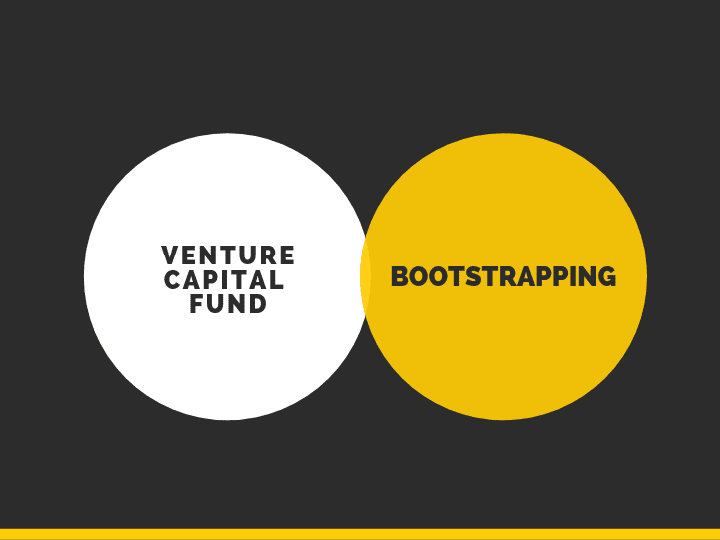
In India’s startup ecosystem, two contrasting funding paths stand out: bootstrapping, i.e., self-funding your venture from savings, revenues or small loans; and venture capital (VC) funding, i.e., raising equity from external investors to accelerate growth.
Both paths have their merits and risks — and the right choice often depends on the founder’s vision, business model, market timing and risk appetite. What follows is a detailed article exploring the two models, sharing key lessons from Indian founders, and outlining actionable insights for entrepreneurs in India.
What is Bootstrapping? What is VC Funding?
Bootstrapping refers to building and growing a business primarily with internal resources: founders’ personal savings, revenue from early customers, reinvestment of profits, and often minimal external borrowing.
Key characteristics include:
Founders retain full ownership and control.
Revenue generation and cost discipline are front-and-centre from (near) Day 1.
Growth tends to be organic and slower, but often more sustainable.
Risk is borne largely by the founders themselves.
VC Funding means raising capital from venture-capital firms (or other institutional investors) in exchange for equity (ownership stake) in the company. This external funding is intended to accelerate growth, scale operations, capture market share quickly.
Key characteristics:
Founders give up some ownership & control (dilution) and often take on investor expectations.
Significant capital allows fast hiring, marketing, product development, expansion.
Growth pressure is high: rapid scaling, often with the aim of exits (M&A, IPO) or large valuations.
Why Indian Founders Are Re-thinking the Bootstrapping vs VC Choice
Rise of the Profit-first Mindset:
In recent years in India the pendulum has started to swing: more founders are valuing profitability, sustainability and control, rather than chasing valuations or raising as much capital as possible. For example:
The article “Bootstrapping vs VC Funding: Why Indian Startups Are Choosing Profit Over Scale” notes that many Indian founders are staying bootstrapped longer, or choosing funding only after traction.
Bootstrapped success stories in India (e.g., Zoho, Zerodha) show that long-term growth without external funding is possible.
The Funding Environment Has Changed
In a so-called “funding winter”, VC capital in India has become more selective; pressure and expectations from investors are high.
Bootstrapping is gaining renewed relevance because founders realise that raising too early may lead to unwanted dilution, loss of control, and premature scaling.
The Indian Market has Unique Conditions
Many Indian startups are leveraging lean models, SaaS, digital adoption, affordable talent and lower cost-structures to succeed without massive capital.
The Indian ecosystem is evolving: founders recognise that not every startup needs VC, especially if the business model is not highly capital-intensive.
Pros and Cons: Bootstrapping vs VC Funding
Here is a comparative overview of the trade-offs between bootstrapping and VC funding for Indian startups.
Bootstrapping. Vs. VC Funding
Control / Ownership: Founders retain full or majority control; minimal external board/investor interference in bootstrapping while Founders give up equity; investor(s) may get board seats; strategic direction may be influenced by investors.
Growth Speed. : In case of bootstrapping it is Slower but more organic constrained by internal cash flows while it is Faster in VC funded companies.
Financial Risk : In the case of bootstrapping, High personal risk for founders (their money, time) but company risk is mitigated by careful spending while in the case of VC funded companies risk is shared with investors; but founder faces pressure to deliver returns quickly.
Investor Pressure & Milestones: In the case of bootstrapped companies, there is less external pressure; more freedom to pivot and focus long-term. On the other hand, there is high pressure: aggressive growth, clear path to exit, quarterly metrics, investor expectations.
Key takeaway: There is no “one size fits all”. The right path depends on your business type, market, vision, and resources.
Indian Founders’ Lessons: What We Learn From Them
1. Prove Your Model First:
Many Indian founders who chose VC effectively first built traction, revenue and proof-points on their own before raising. For example:
“For the first five years, revenues from the outsourcing firm and CarDekho were enough to sustain operations without VC funding… early bootstrapping gave the company adequate time to prove its business model and helped in getting better valuations and lower equity dilution.”
Another note from an Indian blog: “Raise when you’re getting pulled by users faster than you can ship… Otherwise you’ll raise too early.”
Lesson: Try to bootstrap until you have product-market fit, paying customers, and clear metrics. This puts you in stronger position for later funding (if you choose it).
2. Understand Your Business Model’s Capital Needs:
If your business is capital-intensive (hardware, logistics, manufacturing, network-heavy), raising external capital early might make sense.
On the other hand, if you’re building a lean digital or SaaS product that can scale with revenue, bootstrapping might be viable. According to one source:
“Bootstrapping works well when: You can start small and grow with revenue (ex: services, SaaS). Funding makes sense when: You’re in a competitive, fast-moving market.”
Lesson: Be honest about how much capital you will need to scale, how soon you must scale, and whether you can generate revenue fast enough.
3. Retain Strategic Autonomy & Culture:
Bootstrapping often allows founders to preserve their vision, culture, operational style, and make decisions freely without external pressure to “grow at all costs”.
For example, Sridhar Vembu of Zoho says something like: building a profitable sustainable business was the goal rather than chasing valuations.
Lesson: If preserving control, culture and long-term orientation matter to you, bootstrap or delay funding until the right partner comes along.
4. Use Funding as “Rocket-Fuel”, Not Just Because You Can:
If you decide to raise VC funding, make sure the infusion adds real value — whether it’s a major jump in market access, hiring, product development, brand, or defensible scale — and not simply an excuse to burn cash. From one Indian case:
“We never felt the need to raise capital … Whereas some companies get hooked to the dope of ‘earn and burn’ … access to capital is sounding the death knell for their startups … which are succumbing to pressure from investors to either scale quick or perish.”
Lesson: If raising, ask yourself: Will this money change the game? Or will it just allow bigger offices, big headcounts, expensive marketing? Use funding intentionally.
5. Watch Out for Dilution & Exit Pressure:
Several founders point out that taking multiple rounds of funding introduces complexity: investor expectations, possible exit strategies, dilution of founder stake and sometimes loss of control.
Lesson: Know the terms you’re signing, understand how dilution evolves, and ensure you’re comfortable with the implications of taking outside capital.
6. Be Realistic About Growth & Timing:
Bootstrapping trades speed for control; VC funding trades control for speed. In India, timing matters a lot: if you enter a crowded space late, you may need capital to catch up. On the flip side, if you move early in a niche, bootstrapping may give you the cushion to grow steadily.
Lesson: Evaluate your competitive landscape, how fast it is moving, how much first-mover advantage you have, and whether you need to act fast.
7. Have a Hybrid Mindset:
In many Indian success stories, founders started bootstrapped, built initial momentum, then selectively raised external capital to accelerate when ready. For example, some software companies began without funding, proving product-market fit, then raised for scale.
Lesson: Consider a hybrid approach: bootstrap till you have meaningful traction, then raise when you clearly need that extra fuel rather than because it’s available.
“Lessons From the Trenches” – Indian Founder Quotes
“When you’re ‘poor’, you end up innovating more to build a sticky product … We never felt the need to raise capital.” — Founder of CarDekho via bootstrapped early years.
“Bootstrapping gives founders full control and lean discipline … Raising capital accelerates scaling but comes with dilution and investor pressure.” Commentary from Indian startup community.
These voices reflect a mindset that says: you don’t always need VC to succeed; success can come through lean, disciplined growth with founder control.
Which Path Should You Choose? – A Decision Framework
Here are questions every Indian founder should ask when choosing between bootstrapping vs VC funding:
1. What is my business model?
Does it generate revenue early? Is it capital-light (e.g., SaaS, services) or capital-heavy (e.g., logistics, manufacturing)?
2. What is the size of the opportunity and speed requirement?
Do you need to scale very fast to lock-in a market? Or is a slower growth path acceptable?
3. What is my value proposition and competitive edge?
If you have a differentiated product/market fit and can grow with limited capital, bootstrapping might work. If you need massive capital to build network effects or scale fast, VC might help.
4. How much control and ownership do I want to retain?
If retaining vision, culture and majority ownership is key for you, bootstrapping or delayed funding may be better.
5. How comfortable am I with personal financial risk?
Bootstrapping typically means the founder carries more initial financial risk.
6. When will I raise, if I choose VC?
Consider raising only when you have clear traction, metrics, a plan for how the capital will accelerate growth—not just to raise.
7. What is my exit strategy / long-term view?
Are you building a legacy business to keep for decades? Or are you aiming for a high-growth exit in 5-7 years? Your answer may influence funding choice.
Indian Startup Landscape: Real-World Examples
Bootstrapped Champions
Zoho: Founded by Sridhar Vembu in 1996, Zoho remains privately held, profitable and bootstrapped for many years.
Zerodha: Founded by Nithin Kamath & Nikhil Kamath in 2010, built into India’s largest brokerage without external VC funding.
VC-Fueled Growth Stories
[Example: EdTech / E-commerce]: Many Indian startups raised large VC rounds to scale quickly — for instance in foodtech, e-commerce, logistics — but also faced challenges of sustainability, margin pressure, dilution. (See e.g., mention of “growth at all cost” startups).
The key insight: VC funding can help, but it must align with business model, the market timing, the founder’s capacity to manage complexity.
Practical Tips for Indian Founders:
Start lean: Even if you plan to raise later, begin with a minimal viable product, early customers, revenue proof.
Focus on unit economics: Know your cost of acquisition, lifetime value of customers, churn, margins — especially if you are bootstrapping.
Build discipline: Especially with bootstrapping, financial discipline, frugality, focus on cash-flow are essential.
Measure when you’re ready to raise: Have clear KPIs, traction, growth signals, a plan how capital will be used. Don’t raise just because it’s available.
Choose investors carefully: If opting for VC, pick investors who understand your business model, share your vision, and offer more than just money (mentorship, network, support).
Maintain cultural and strategic integrity: Whether bootstrapped or funded, maintain your company’s core values and product focus.
Prepare for the long-haul: Whether your plan is 3 years or 10 years, ensure you’re aligned with the business timeline.
Consider hybrid approaches: Bootstrapping first, then raising when needed — this provides an advantage of traction plus optional external fuel.
Conclusion:
In India’s evolving startup ecosystem, the debate bootstrapping vs VC funding is no longer binary. Both paths have their place. Bootstrapping offers control, sustainability, strong product discipline and potentially lower risk of dilution — but may require slower growth and more founder sacrifice. VC funding offers speed, scale, resources and network — but comes with dilution, investor pressure, potential loss of control and higher stakes.
Indian founders are increasingly learning that the question isn’t “Which is best?” but “Which is right for my business, at this time, given this market, with this team and this vision?” Start with your business model, traction, vision and risk-appetite, then choose the path (or hybrid path) that aligns.
As one founder put it:
“The money you raise will shape the company you build.”
So build consciously, choose wisely, and lead your venture with clarity. Whether you bootstrap for decades or scale with capital, your ultimate goal is to build a meaningful, sustainable business — not just chase valuations.
Keywords: bootstrapping Indian startup, VC funding India, Indian founders, startup funding India, sustainable growth startup, revenue before funding, founder-led business India, control vs dilution startup, bootstrapped success stories India, venture capital Indian ecosystem.
Please connect on Whatsapp on 98200-88394 or email to intellex@intellexconsulting.com for any assistance in Fund raising
Team- Intellex Strategic Consulting Private Limited
Follow us on LinkedIn:
https://www.linkedin.com/company/intellexcfo-com
https://www.linkedin.com/company/intellexconsulting
www.StartupStreets.com, www.GrowMoreLoans.com, www.GrowMoreFranchisees.com, www.intellexCFO.com, www.CreditMoneyFinance.com, www.StartupIndia.Club, www.EconomicLawsPractice.com