From Idea to Funding to Exit: The Complete Modern Startup Journey Explained.
A detailed guide to the modern startup journey from ideation and MVP to fundraising, scaling, and exit , featuring expert advisory support from IntellexCFO.com.
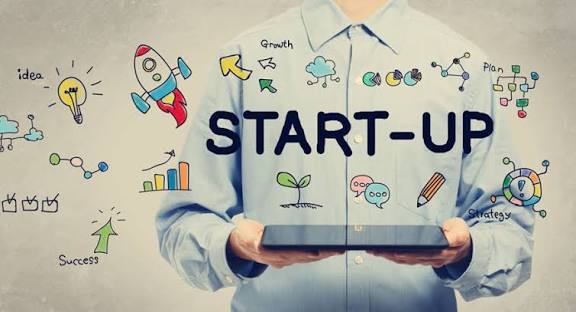
The modern startup journey is no longer driven by intuition alone. From ideation to funding and eventual exit, successful startups follow a structured, data-driven path focused on validation, traction, scalability, and strategic fundraising.
Understanding each stage of the startup lifecycle helps founders allocate resources effectively, attract the right investors, and build sustainable businesses.
We walk you through the end-to-end startup journey, highlighting best practices at every stage and explaining how expert advisors like IntellexCFO.com, a division of Intellex Strategic Consulting Pvt Ltd, can support founders throughout the process.
Stage 1: Ideation and Validation – Laying the Foundation
Every successful startup begins with a strong idea, but idea validation determines whether that idea can become a viable business.
Generate and Refine Your Startup Idea
Startup ideation starts with identifying real-world problems or unmet market needs. Founders should focus on solutions that create measurable economic or social value. Differentiation is critical your idea must offer a clear advantage over existing alternatives.
Conduct Market Research
Comprehensive market research for startups includes:
Defining your target customer persona
Estimating total addressable market (TAM)
Analyzing competitors and substitutes
This step validates whether the opportunity is large enough to justify building a startup.
Validate the Problem
Engage directly with potential users through interviews, surveys, and pilot tests. Early customer validation ensures that the problem is real and worth solving, reducing the risk of building a product nobody wants.
Stage 2: MVP Development and Product-Market Fit:
Once the idea is validated, the focus shifts to building and testing the product.
Build a Minimum Viable Product (MVP)
An MVP (Minimum Viable Product) includes only the essential features required to deliver value to early adopters. The goal is speed, learning, and feedback and not perfection.
Iterate Based on Feedback
Use customer feedback and analytics to refine features, improve usability, and fix gaps. This iterative approach accelerates learning and lowers development costs.
Achieve Product-Market Fit (PMF)
Product-market fit occurs when customers actively use your product, retention improves, and organic growth begins. Achieving PMF is a key milestone before raising institutional funding.
Also Read: Startup Funding in India – Sources of Funding and general criteria
Stage 3: Startup Fundraising and Scaling Growth
With traction and PMF, startups are ready to raise capital and scale.
Key Startup Funding Rounds Explained
Pre-Seed Funding
Early capital from founders, friends, family, or angel investors to build the MVP and initial team.
Seed Funding
The first formal equity round used to validate the business model, acquire customers, and build operational capacity.
Series A Funding
Institutional funding led by venture capital firms to scale operations, grow revenue, and expand teams after PMF.
Series B, C, and Beyond
Growth-stage funding focused on market expansion, acquisitions, global scaling, or IPO preparation.
The Fundraising Process
Assess Funding Readiness
Clearly define why you need capital, how much to raise, and how it will drive growth.
Prepare a Strong Pitch Deck
Include your problem, solution, traction, business model, competitive advantage, team, and financial projections.
Target the Right Investors
Align with investors whose thesis matches your industry, stage, and geography.
Manage the Fundraising Cycle
Fundraising is time-intensive and competitive. Strong execution and business performance remain the best investor magnets.
Beyond Funding: Scaling, Growth, and Exit Strategy
Growth and Expansion
Post-funding, startups focus on scaling operations, increasing market share, optimizing unit economics, and entering new markets.
Exit Strategy for Startups
A well-planned startup exit strategy provides liquidity for founders and investors. Common exit routes include:
Initial Public Offering (IPO)
Strategic acquisition
Merger or buyout
Exit planning should begin early and align with long-term business goals.
Trusted Advisory Partner: IntellexCFO.com
Navigating the startup journey requires more than ambition, it requires expert financial and strategic guidance.
IntellexCFO.com, a division of Intellex Strategic Consulting Pvt Ltd, is a reliable advisor for startups, founders, and growth-stage businesses.
How IntellexCFO.com Supports Startups
Virtual CFO & financial strategy services
Startup fundraising advisory
Investor readiness & pitch deck support
Financial modeling & valuation
Growth and exit planning
Contact Details
📞 Mobile: 98200-88394
📧 Email: intellex@intellexconsulting.com
🌐 Website: www.IntellexCFO.com
Other Network Platforms:
www.StartupStreets.com
www.GrowMoreLoans.com
www.GrowMoreFranchisees.com
www.CreditMoneyFinance.com
Team: StartupIndia.Club
Other Interesting Business Articles:
SME IPOs in India: Insights from Regulators, Bankers & Advisors
SIDBI – Powering India’s MSME Growth: Funding, Schemes & Business Support.
The Hidden Meaning Behind Investor Questions And How Smart Founders Turn Them Into Fundraising Wins: