
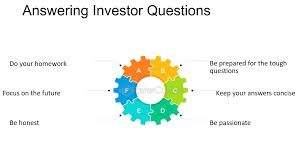
The Hidden Meaning Behind Investor Questions And How Smart Founders Turn Them Into Fundraising Wins:
Mastering Startup Fundraising, Investor Meetings & Venture Capital Conversations
In every startup fundraising journey , whether it’s seed funding, a pre-Series A round, or a full Series A raise , founders often feel like investor meetings are interrogation sessions.
But here’s the truth: investors aren’t trying to intimidate you. They’re assessing how well you understand your business, your market dynamics, and your ability to stay calm under pressure. Every tough investor question hides a deeper intention and founders who decode that intention gain a massive advantage during venture capital discussions.
We break down what investors are really asking and how smart founders turn tough questions into clarity, confidence, and stronger investor conviction.
1. “What problem are you solving?”
What investors actually mean:
👉 Is the problem big enough and painful enough for customers to pay?
How smart founders answer:
Lead with the customer pain point, not the product. Show domain expertise and quantify the scale of the problem.
Example:
“We help small logistics companies reduce idle truck time — a $7B inefficiency in the U.S. market alone.”
This answer doesn’t just describe the problem rather it sells the opportunity, which is exactly what strong pitch decks achieve.
2. “Who are your competitors?”
What investors are really asking:
👉 Do you understand your competitive landscape and can you win?
How smart founders answer:
Never say “We don’t have competitors.”
Competition validates your market.
Position your product as unique, focused, and strategically advantaged.
Example:
“We’re not trying to replace enterprise incumbents rather our focus is underserved SMBs who need simplicity, not complexity.”
This shows clarity, positioning, and realistic go-to-market strategy.
3. “What’s your business model?”
The deeper investor question:
👉 Can you make money sustainably and scale profitably?
How smart founders answer:
Explain the engine behind revenue, not just pricing. Investors want to hear about CAC, LTV, churn, and payback periods.
Example:
“Our SaaS model blends predictable MRR with a data analytics upsell. CAC payback is under four months, and churn is below 3%.”
This signals strong understanding of startup unit economics — a critical part of venture capital evaluation.
4. “Why now?”
What they’re really asking:
👉 Is this the right market timing to succeed?
How smart founders answer:
Connect your startup to market timing, macro trends, regulatory tailwinds or tech shifts.
Example:
“Remote compliance costs have tripled since 2020. Our platform automates these tasks, reducing CFO workload and cost.”
Great founders use timing as a competitive advantage.
5. “Why you?”
The hidden meaning:
👉 Does this team have the credibility and founder-market fit to execute?
How smart founders answer:
Highlight your domain expertise, insights, and unfair advantages.
Example:
“Our founding team spent a decade in logistics tech but we’ve built this infrastructure before and understand industry bottlenecks.”
Investors invest in founders first this is where you prove your leadership.
6. “How much are you raising and how will you use it?”
What investors actually want to know:
👉 Do you have a roadmap tied to growth milestones, not just expenses?
How smart founders answer:
Tie your fundraising ask to outcomes, traction goals, and next-round readiness.
Example:
“We’re raising $1.5M to reach 5,000 paying users and $100K MRR positioning us for a strong Series A in 18 months.”
This shows discipline, clarity, and capital efficiency which is essential for successful startup fundraising.
7. “What keeps you up at night?”
What they’re really asking:
Are you self-aware and proactive about risks?
How smart founders answer:
Be honest but strategic. Acknowledge real challenges and demonstrate mitigation.
Example:
“Customer acquisition costs are rising . We are countering this with a referral loop where 1 in 4 new users come organically.”
Honesty builds trust. Strategy builds confidence.
Founder Advantage: Turn Investor Questions Into Fundraising Momentum
Investor questions are not obstacles , they’re opportunities.
Questions reveal how deeply you understand your business fundamentals:
• traction
• metrics
• scalability
• market strategy
• competitive advantage
• financial discipline
Founders who answer with clarity don’t just pitch , they inspire investor conviction.
Remember:
✨ Investors invest in clarity, not charisma.
✨ Great answers come from strong thinking, not memorized scripts.
✨ The smartest founders use investor questions to show depth, insight, and leadership.
Key Takeaways for Startup Founders:
✅ Decode the intention behind investor questions
✅ Use data, insight, and real-world experience in your responses
✅ Make pitch meetings a two-way conversation
✅ Signal confidence through clarity and strategic thinking
✅ Align your pitch deck, metrics, and narrative for maximum impact
✅ Treat investor questions as leverage — not pressure
📞 Need Expert Guidance for Fundraising, Valuations, or Investor Pitch Preparation?
Connect with IntellexCFO.com
A division of Intellex Strategic Consulting Private Limited
📱 Mobile: 98200-88394
📧 Email: intellex@intellexconsulting.com
We help founders raise capital smarter — with better pitch decks, better investor preparedness, and better financial strategy.
Team : Startupindia.club